Midstream Energy Management Solutions
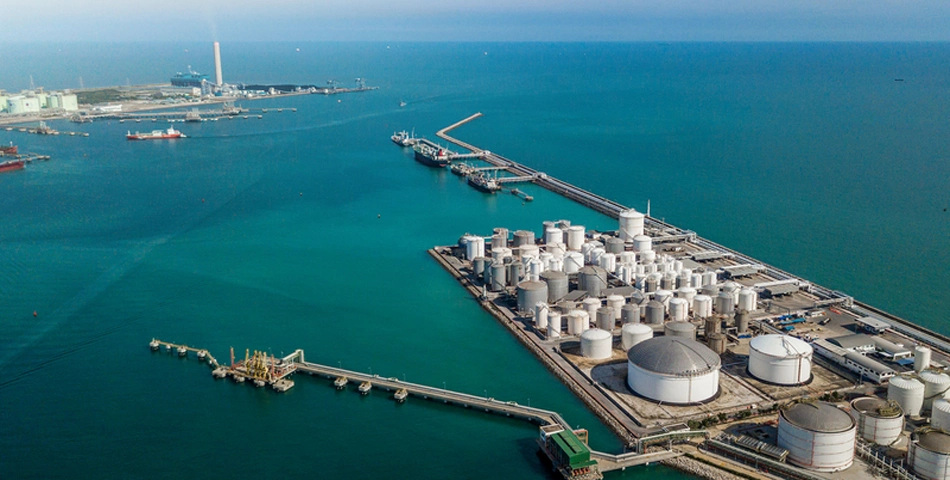
Optimized LNG and Midstream Management
Manage Fleet Utilization and Train Capacity
Transform your LNG export operations - tolling, merchant, equity, or hybrid - Energy Components streamlines any business model.
Integrated LNG Operational Planning
Leverage Energy Components’ precision planning and LNG scheduling, ensuring fair and prudent treatment of all joint venture partners.
Maximize Midstream Operations Throughput and Revenue
Optimize productivity and cash flow with Energy Components’ integrated planning, nomination, actualization, and reporting capabilities.
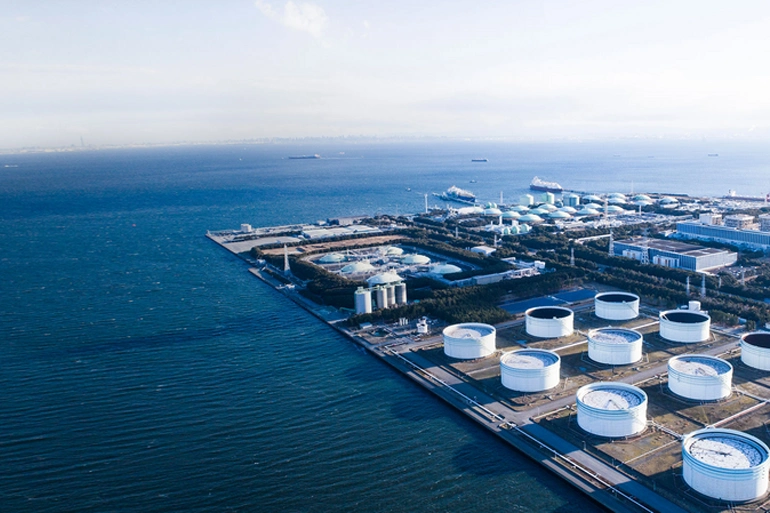
Increase LNG Import Terminal Utilization
Maximize terminal revenue, ensure customer satisfaction with enhanced planning for efficient loading, storage, and send-out capabilities.
Energy Accounting for Hydrogen
Improve hydrogen facility operations with Energy Components by managing terminal operations, inventory, and transport.
SLNG’s Enhanced Efficiency with Cloud-Driven LNG Operations
SLNG’s complex commercial terminal operations underwent a system-wide cloud transformation to enable a mandatory, uninterrupted send-out of natural gas for domestic consumption.
100%
Capacity Utilization Achieved
by Terminal Operators
50%
Global LNG Cargoes Scheduled
Using Quorum Solutions
20+
Years of Experience
in the LNG Industry
Energy Components Key Features
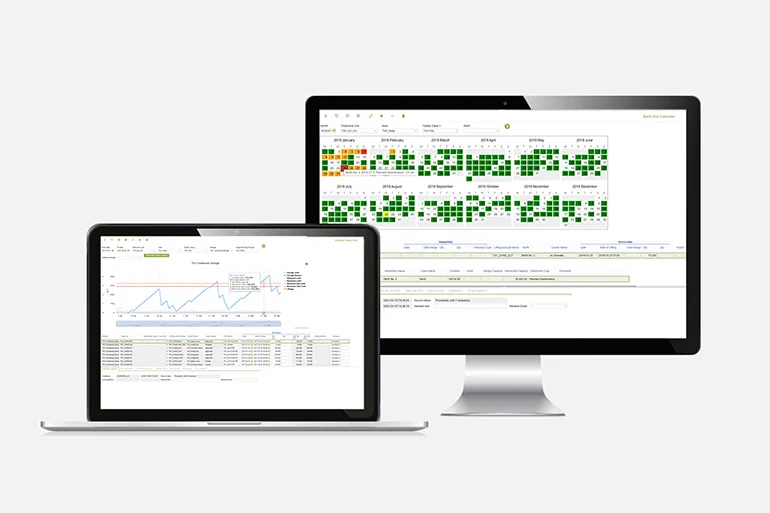
Manage a portfolio-wide or terminal-specific Annual Delivery Program (ADP) and short-term delivery schedule (SDS) ensures a feasible cargo and send-out schedule without conflicts. Optimize use of berth allocation and logistics with KPI-driven scenario analysis for comparison between different options.
Conduct precise energy accounting of energy, mass, and volume supporting the computation of both total and per-component inventory for both individual tanks and the entire LNG terminal. Energy Components' comprehensive approach includes accounting for losses, internal consumption, and boil-off in strict adherence to contractual agreements.
Use business process automation and mobile apps to streamline terminal activities related to LNG unloading and re-loading, including cargo analysis, bill of lading/unloading, timesheets, port logs, demurrage calculations and cargo document generation and upload.
Track Hydrocarbons from Production to Revenue
Achieve operational excellence and leverage decision-ready data by tracking hydrocarbons from production to revenue through pipeline, LNG vessel, rail, or truck
FAQs
Energy Components Midstream is Quorum Software's hydrocarbon management solution for midstream oil and gas operations, covering transport, terminals, LNG, pipelines, and marine logistics.
It manages the full midstream value chain: from product receipt at a terminal or pipeline inlet, through storage, blending, and processing, to delivery and commercial settlement with customers and partners.
Key modules include ownership allocation, entitlement calculations, sales contract management, price calculations, invoicing, inventory valuation, terminal operations, and cargo planning.
Available as a fully managed SaaS service (EC Midstream SaaS), with LNG Export and LNG Import as reference deployment use cases in Quorum's cloud programme.
Yes. Energy Components Midstream is purpose-built for LNG export and import terminal management, and EC Midstream SaaS is a core use case in Quorum's cloud programme.
LNG capabilities:
- Marine Services and Fleet Management: Vessel scheduling, berth allocation, and LNG carrier management.
- Cargo Planning and Optimisation: HCM LNG Planner for delivery plan optimisation, contract delivery tracking, and fleet utilisation analysis.
- Terminal Operations: Loading, unloading, inventory management, and mass balancing.
- Nomination and Actualization: Contractual LNG cargo commitments tracked against physical movements.
- Emissions tracking: Emission Management add-on tracks LNG-related emissions for regulatory compliance.
Energy Components Midstream provides a digital representation of the full midstream network, covering physical infrastructure including gathering lines, processing plants, tanks, rail, LNG facilities, and pipelines.
Physical assets and connections are modelled with operational parameters — capacity, routes, and constraints — enabling accurate planning and throughput management.
Integrated planning and scheduling modules support scenario-based planning for throughput, cargoes, berths, and logistics across terminals and transportation networks.
The network model incorporates operational data to reflect real-world flow possibilities and constraints, enabling planning, throughput optimisation, and full transparency across the midstream value chain.
Energy Components Midstream provides full custody transfer management across terminals and pipelines, tracking energy, mass, and volume for comprehensive inventory and hydrocarbon accounting.
- Total and per-component balances are calculated for all tracked products.
- Custody transfer points — at tank farms, pipelines, and export terminals — are reconciled with measured volumes and contract terms.
- Product composition data (e.g., component percentages) is included in accounting for accurate valuation and regulatory reporting.
- Losses and internal consumption across assets are accounted for in the mass balance.
- The Customer Portal add-on gives partners real-time visibility into their product positions and balances.
Energy Components Midstream automates nomination, scheduling, and tariff management across pipelines and terminals.
- Nomination and scheduling for pipelines and terminals are integrated into operational planning modules.
- Contractual parameters — take-or-pay, tolling, merchant, and equity terms — are reflected in planning and accounting logic.
- Tariffs and rate structures are encoded so nominations and scheduled movements are evaluated against contract conditions.
- Actualization workflows reconcile delivered volumes with nominations and tariff terms for billing.
- Automated reporting ensures compliance with contractual commitments and supports asset utilisation optimisation.
Energy Components Midstream automates invoice generation and settlement calculations directly from measured volumes, eliminating manual reconciliation.
- Measured data feeds into the energy accounting engine to calculate delivered quantities per contract.
- Invoices and settlement calculations are automated, accounting for tariff rates, contractual terms, losses, and adjustments.
- Revenue recognition and invoicing outputs are generated based on validated measurement and contractual logic.
- Outputs can feed directly into ERP and financial systems via Public APIs, enabling end-to-end billing automation.
This ensures all billing aligns with actual operational data and commercial agreements, with a full audit trail.
Energy Components (EC) is Quorum Software's integrated hydrocarbon management platform, designed to track and manage hydrocarbons from the wellhead through to delivery and commercial settlement.
Available for upstream oil and gas operations, midstream transport and terminal management, and as a fully managed cloud service (EC SaaS) on AWS.
Key capabilities: production allocation, hydrocarbon accounting, commercial contract management, emissions tracking, regulatory reporting, and integration with SCADA, ERP, and data historian systems.
Energy Components is used by IOCs, NOCs, and independents across more than 30 countries. EC SaaS is SOC 2 Type 2 certified with 99.5% availability SLA and continuous software upgrades.
EC SaaS (Energy Components as a Service) is Quorum's fully managed, cloud-hosted delivery of Energy Components, built on AWS and certified to SOC 2 Type 2.
Vs self-hosted:
- Evergreen upgrades: Always on the latest version, no upgrade projects.
- Reduced TCO: No hardware, DBA, or DR costs.
- 24/7 support: Unlimited incidents under enterprise plans.
- Security: SOC 2 Type 2, ISO/IEC 27001-aligned, annual penetration testing.
- Resilience: 99%–99.5% SLA, multi-AZ redundancy, RTO as low as 24 hours.
- Scalability: Auto-scaling infrastructure tuned to customer workloads.
Woodside Energy deployed EC SaaS globally, confirming on-budget delivery and improved compliance.
Energy Components includes an Emission Management add-on for both Upstream and Midstream, enabling accurate emissions tracking and regulatory reporting.
- Integrated accounting: Flaring, venting, fuel combustion, and fugitive emissions captured within the hydrocarbon workflow.
- Auditability: Version-controlled, auditable emission data meeting national and international regulatory requirements.
- Regulatory output: Scope 1 emissions reporting aligned to applicable environmental frameworks.
- Real-world deployment: Woodside Energy used EC SaaS Emission Management for the Sangomar greenfield project in Senegal — emissions tracked from first production.
- SaaS updates: EC SaaS customers receive automatic add-on updates as emission regulations evolve.
Energy Components provides a modern integration architecture connecting to SCADA, data historians, ERP, LIMS, and cloud data services.
- ECIS Agent: Lightweight standalone application deployable close to the data source — no complex firewall configuration required
- Public APIs: Full domain-layer APIs including GraphQL and REST — full insert/update/delete with audit trail.
- Dataloader: Bulk import for historical and batch data.
- Event-based integration: Real-time event-driven patterns for high-frequency operational data.
- Pre-built connectors: Data historians (OSIsoft PI), ERP, simulators, optimisers, and financial platforms.
In EC SaaS all integration is secured via OIDC and HTTPS, governed by EC's built-in access control and auditing layer.
Energy Components is used by international oil companies (IOCs), national oil companies (NOCs), mid-size operators, and LNG producers across more than 30 countries.
Notable deployments include:
- Woodside Energy: Deployed EC SaaS across global operations including USA, Trinidad and Tobago, and the Sangomar greenfield project offshore Senegal. Selected for hydrocarbon management accuracy, Emission Management add-on, and cloud integration with Power BI.
The platform is deployed for upstream hydrocarbon accounting, midstream terminal and LNG management, and cloud-hosted operations at scale.
Energy Components has been in continuous development for over 30 years, built on industry best practices from serving global energy operators.
Yes. Energy Components balances industry-standard best practices with flexible customisation for company-specific requirements.
- EC Extension Framework: Governed framework for unique configuration and custom functionality — version-controlled and security-scanned.
- Business Process Modelling and Automation (BPM): Define and automate multi-step workflows — data validation, allocation runs, approval chains, report generation.
- Asset templates: Pre-built templates for upstream fields, LNG terminals, and pipelines — adaptable to company requirements.
- Self-service tools: EC Class Model Editor and EC Configuration Tool allow CoE teams and partners to maintain EC independently.
In EC SaaS, all customisations pass formal extension review and automated QA, ensuring compatibility with continuous upgrades.