 8 min read
In oil and gas production, management by exception is an operating method. Alarms, thresholds, and validation rules determine where field and office teams focus attention. Wells and meters within normal parameters move through the workflow without manual intervention. Readings and volumes that fall outside defined limits surface as exceptions and get resolved.
Quorum zdSCADA supports this approach from the field side, with configurable alarm thresholds that route events to the right supervisor before they compound. The same exception logic extends further down the data chain, into production reporting and measurement, where exception queues and review-by-exception workflows replace full-table review with structured, targeted resolution.
Key Takeaway
Management by exception narrows the daily review to what actually needs attention. In production operations, alarm thresholds do this in near real time. In production reporting, exception queues surface volume gaps before close. In measurement, review-by-exception workflows flag suspect readings before they affect settlement.
What Management by Exception Means in Operations
The phrase originates in management theory, but in oil and gas it describes something specific. A lease operator or pumper doesn't review every well at the same level of effort each day. Alarm states and exception triggers determine where time goes. A well producing within normal variance gets its scheduled check. A well with a low-flow alarm or a missed reading gets addressed the same shift.
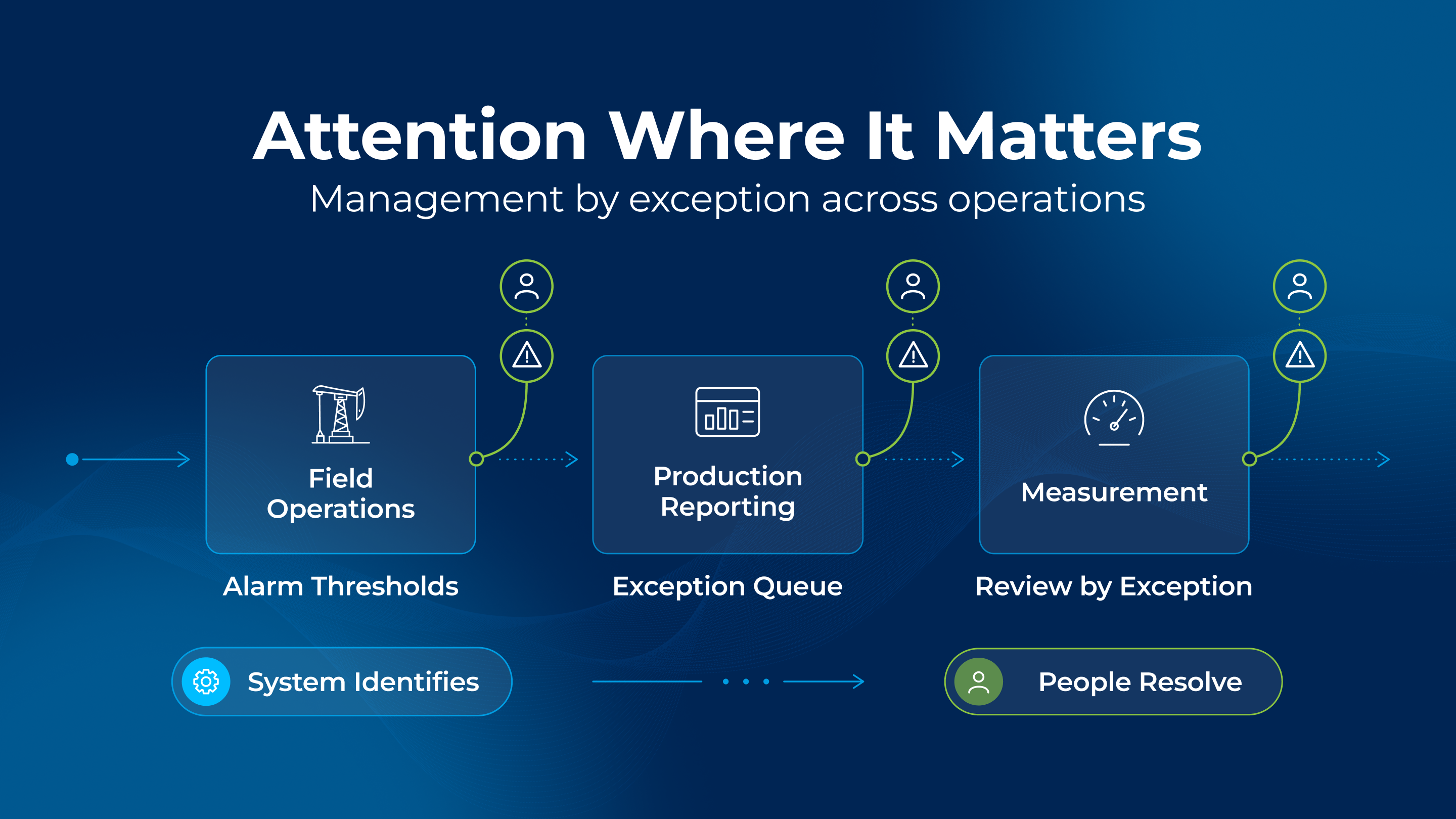
This logic runs through the full field-to-office chain. A field supervisor watching real-time data sees exceptions flagged as they occur. A production accountant reviewing daily volumes works from an exception list. A measurement analyst validating meter data reviews a queue of suspect readings. The scope of what requires human review narrows at each step, and with it, the effort required to find what matters.
Alarm Thresholds in Field Operations
An alarm threshold is a configured limit tied to a specific reading or condition: flow rate below a set level, tank volume above fill threshold, a device that has stopped reporting. When a condition crosses the limit, the event generates an alarm and routes it to the appropriate person through the configured notification path.
For route pumpers and field supervisors, this changes how daily attention is allocated across a well route. Without alarm-based routing, a pumper visits every well on a geographic schedule at roughly equal frequency. With thresholds configured and actively monitored, priority is set by operational state. The alarm-flagged well gets addressed first. Everything within normal variance follows the regular schedule. Alarm routing changes how information reaches the field team, not the team's underlying role or judgment.
Getting the threshold configuration right is where this method either works or fails. Limits calibrated to historical operating ranges for the basin and lift method produce alerts that reflect real events. Limits set too wide let real problems pass undetected. Limits set too narrow generate alert fatigue, which erodes the operating discipline that makes the exception model effective in the first place.
Exception Queues in Production Reporting
In production reporting, management by exception takes the form of a structured exception queue. Daily volumes flow from field systems into the production workflow. Validation logic runs against incoming data, compares volumes against prior-period runs and allocation expectations, and flags records outside configured tolerance.
Quorum Production includes validation tools that identify reporting exceptions and surface them for review. The accountant works the exception list. Records with clean data move forward through allocation and reporting. Records flagged for missing input, volume gap, or failed validation get reviewed, corrected, and documented before the period closes.
At scale, this matters for throughput. An operator managing fifty wells can review daily volumes manually with reasonable effort. At five hundred or five thousand wells, full-table review is not viable during a standard close window. The exception queue is what lets production teams absorb well count growth without an equal increase in accountant review hours.
Review by Exception in Measurement
Measurement applies the same approach at a different point in the data chain. A measurement analyst responsible for hundreds or thousands of meter points cannot manually validate every reading each period. Configured validation rules run against incoming measurement data, identify readings outside tolerance, and surface them as exceptions for analyst review.
Quorum FLOWCAL supports configurable validation rules and exception-based review workflows. Suspect readings, anomalies detected during automated data collection, and readings that fail calibration checks route to the measurement analyst's queue. The analyst reviews flagged records, makes corrections, and documents the resolution in the audit trail. This produces a traceable record of what was flagged, who reviewed it, and what correction was applied, which supports regulatory reporting requirements and prior-period adjustment processes.
For teams operating under staffing constraints or regulatory pressure, the measurement exception model is particularly relevant.
Read three case studies for the full story:
- Oklahoma-Based E&P Company Relies on FLOWCAL for Compliance and Measurement Accuracy in Lean Times
- 30 Years of FLOWCAL: Fran Rucobo on Review by Exception and Auto Edits
- Operating by Exception: Efficient Plunger Lift Optimization at Faulconer Energy
What Changes for Pumpers and Analysts
Alarm-based routing shifts how a route pumper allocates time. Rather than moving across a route by geography alone, the pumper addresses alarm-flagged wells first, then continues the scheduled route. The result is that the wells most likely to need intervention get attention earliest in the shift.
For analysts, the change is in how exceptions are identified. Reviewing a full volume or meter table to find variance by eye is slow and prone to inconsistency. An exception queue narrows the daily review to the records that actually need attention. Variance investigation, regulatory review, and audit preparation all move faster when the system has already completed the identification step.
Both changes come down to the same principle. The system carries the monitoring and detection load. People carry the resolution load. This division only holds when thresholds and validation rules are configured correctly and maintained as operating conditions change.
Audit Trails and Control
One outcome of exception-based workflows that is easy to overlook is the audit record they produce. When exceptions are identified by configured rules and reviewed through a structured queue, every decision point is documented: what was flagged, when it was flagged, who reviewed it, and what correction was applied.
This matters for more than compliance. Prior-period adjustments, dispute resolution, and regulatory submissions all require traceable records that connect the original reading to the final reported volume. Exception workflows produce that record as a byproduct of the review process, without requiring separate documentation effort.
Conclusion
Management by exception connects alarm thresholds, exception queues, and measurement review workflows across the full field-to-office data chain. For field teams, it changes how attention is allocated across a well route. For production and measurement analysts, it replaces manual triage with a structured, documented review process. The operating method scales because the system handles identification and people handle resolution.
Frequently Asked Questions
What is management by exception in oil and gas?
In oil and gas operations, management by exception means that alarms, thresholds, and validation rules determine where field and office teams direct their attention each day. Readings, volumes, and events within defined parameters move through the workflow without manual intervention. Those outside defined limits surface as exceptions for review and resolution.
How do alarm thresholds work in production operations?
An alarm threshold is a configured limit for a specific reading or operational condition. When a reading crosses the threshold, the system generates an alarm and routes it to the appropriate field contact. Route pumpers and field supervisors use alarm routing to prioritize which wells need attention on a given shift rather than giving every well equal attention by default.
What is review by exception in measurement?
Review by exception in measurement means a measurement analyst reviews a structured list of flagged readings rather than the full data set. Configured validation rules run against incoming meter data, flag readings outside tolerance, and surface them as exceptions. The analyst reviews those records, applies corrections, and documents the resolution in the audit trail.
How does exception management affect route pumpers specifically?
Alarm-based routing changes how a route pumper prioritizes a shift. Alarm-flagged wells are addressed first. Wells within normal parameters follow the standard route schedule. The pumper's underlying role and judgment remain the same; what changes is how operational information is delivered and sequenced.
Does exception-based review support regulatory compliance?
In measurement workflows, yes. Exception-based review produces a documented record of what was flagged, who reviewed it, and what correction was applied. That audit trail supports regulatory reporting requirements and can be referenced during audits or for prior-period adjustments. The documentation is a byproduct of the review workflow rather than a separate step.
 Previous Page