 7 min read
Field data capture is the process of recording the physical measurements and operational events that define daily production. Pressures, Meter Readings, Tank levels, run ticket volumes, well test results, downtime intervals, and chemical or injection volumes all need to reach the production system in a form that allocation and accounting processes can use. The accuracy of that record determines whether the downstream reporting holds up under review.
Key Takeaway
Field data capture covers everything measured or recorded at the wellsite each day. Whether data is collected manually or through automated systems determines how quickly and accurately it reaches allocation and production accounting. The goal is a single, traceable record from source measurement to final report.
What Gets Captured Every Day
Production teams record several categories of data at the wellsite daily. Tank gauges document fluid levels and support run ticket verification. Run tickets record hauled oil volumes and form the basis for purchaser reconciliation. Downtime entries log the duration and cause of production interruptions, which feeds variance analysis and regulatory submissions. Well test data provides the basis for allocation calculations across commingled production. Chemical injection volumes and artificial lift usage are also tracked because they affect both cost accounting and wellsite performance analysis.
Each data category has a different capture frequency and a different downstream use. Tank levels at high-volume sites may be recorded multiple times per day. Well tests are periodic events tied to regulatory or operational schedules. Data captured at different times, by different people, and in different formats must still produce a consistent and auditable record.
Manual Capture and Automated Capture
Manual field data capture relies on lease operators, pumpers, or field technicians visiting each wellsite and recording measurements on paper or in a field app. That data is then entered into the production system at the office or from the field on a tablet. Manual capture is appropriate for sites where sensor infrastructure is limited, where well counts are low, or where the economic case for automation has not been established. Manually collected data arrives in batches, which delays visibility and creates a window where exceptions go undetected.
Automated capture, typically through a SCADA platform, eliminates that timing gap by streaming field readings continuously to a central system. Quorum's zdSCADA connects field devices including meters, sensors, and RTUs and delivers operational data to dashboards accessible on desktop, tablet, iOS, and Android. When outages or connectivity interruptions occur at remote sites, built-in logging and data backfill preserve the historical record so gaps do not appear in the production dataset.
Most operations use a combination of both methods. Automated SCADA feeds cover continuously instrumented wells and facilities. Manual capture covers sites that are not yet automated and data types that require human input regardless of sensor coverage, such as run ticket details and downtime cause codes.
Remote Sites and Connectivity
Wellsites in remote basins often lack reliable cellular or broadband connectivity. For automated capture, the SCADA architecture needs to support multiple connectivity options including cellular gateways, VPNs, and MQTT-enabled edge devices. Quorum's zdSCADA supports these configurations and maintains data continuity through outage periods by logging readings and backfilling once connectivity resumes.
For manual capture workflows in remote settings, the practical constraint is the time between the field visit and when data reaches the production system. Paper-based capture introduces transcription errors and delays. Mobile field apps reduce both, but their value depends on whether captured data integrates directly with the production system or requires a separate import step.
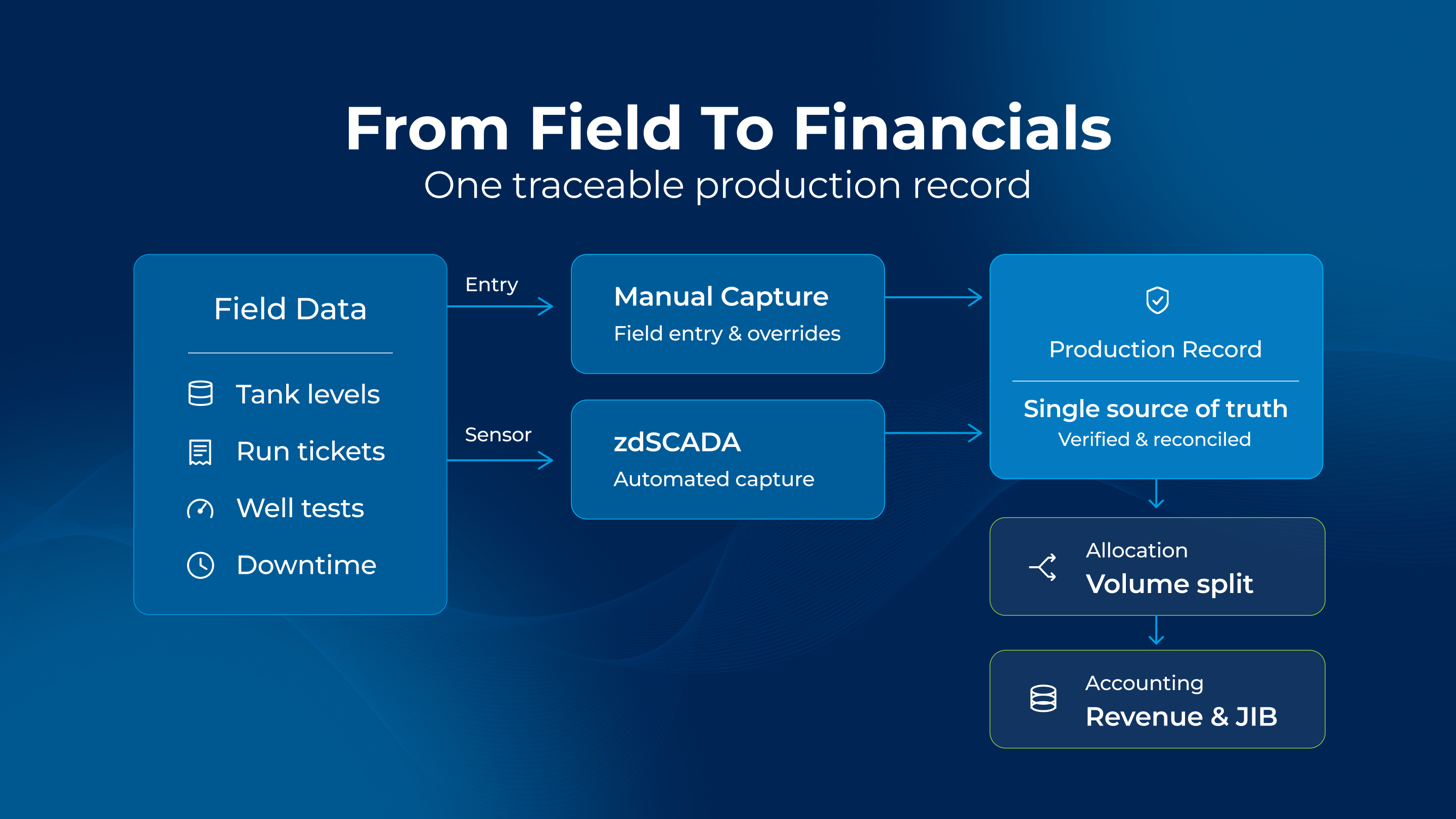
How Captured Data Reaches Allocation and Production Accounting
Field measurements do not carry financial meaning until they pass through allocation. Allocation calculates each well's proportionate share of commingled production from a facility, using tank volumes, meter readings, and well test data as inputs. The integrity of allocation and the ability to audit it depend on the accuracy and completeness of the captured data feeding it.
Quorum Production centralizes data from SCADA systems, field data capture, and measurement systems into a governed production record. It automates allocation processing using captured volumes, applies the allocation logic, and produces outputs that flow into production accounting. Validated production volumes then move into revenue distribution, joint interest billing, and regulatory reporting, each with a traceable link back to the source measurement. This removes the manual reconciliation step that typically extends the gap between field close and financial close.
The auditability of this chain matters in commercial and regulatory contexts alike. Volume disputes with purchasers, regulatory submissions, and joint venture reconciliations all require showing where reported numbers came from and how they were calculated.
Selection Checklist
- When evaluating field data capture for a given operation, these factors determine which approach fits:
- Site instrumentation. Wellsites with RTUs, meters, or sensors in place can support automated SCADA-fed capture. Sites without instrumentation require manual workflows or phased automation.
- Remote connectivity. Operations in areas with limited cellular coverage need SCADA platforms that support edge connectivity and maintain data continuity during outages.
- Data requiring manual input. Even automated sites require manual entry for run ticket details, downtime cause codes, and chemical injection records.
- Downstream system integration. Captured data should flow directly into the allocation and production accounting system without a manual import step.
- Audit and traceability requirements. Regulatory reporting and joint venture accounting require source-to-report traceability. Capture and allocation tools should maintain a complete audit record of inputs, calculations, and adjustments.
- Volume and frequency. High-rate wells and multi-tank facilities require capture tools that handle concurrent data streams without creating reconciliation gaps.
FAQ
What is field data capture in oil and gas?
Field data capture is the process of recording physical measurements and operational events at the wellsite, including tank levels, meter readings, run ticket volumes, downtime events, well test results, and injection volumes. These records are the inputs that production accounting and allocation processes depend on.
What is the difference between SCADA-fed capture and manual capture?
SCADA-fed capture is automated, streaming data from field sensors to a central system in near real time. Manual capture relies on operators recording measurements directly, then entering that data into the production system. Most operations use both: SCADA for continuously instrumented sites and manual processes for data types or locations where automation is not in place.
How does captured field data connect to production accounting?
Captured volumes move through an allocation step that calculates each well's share of commingled production. Allocation outputs feed into accounting, which handles revenue distribution, joint interest billing, and regulatory submissions. When this connection is automated, the need for manual reconciliation decreases and the gap between field capture and financial reporting narrows.
Can field data capture software work in areas with limited connectivity?
SCADA platforms designed for remote oil and gas operations support cellular gateways, VPN configurations, and edge connectivity options. Data logging and backfill capabilities preserve the production record during connectivity interruptions so remote site data does not create gaps in the reporting dataset. For manual data capture, Field Data Capture tools like Quorum Productions mobile application (ODP Mobile) can record and store readings offline and sync to the production allocation module when connectivity is restored.
What data types still require manual entry on automated sites?
Run ticket details, downtime cause codes, chemical injection records, and some well test parameters are typically entered manually even where SCADA coverage exists. These require human judgment or involve third-party documentation that cannot be automated through sensor data alone.
 Previous Page