 5 min read
Land and Lease Management Best Practices for Energy Projects
For land-driven workflows, solutions like Upstream On Demand Land help teams keep ownership, obligations, and approvals connected in one system of record. Land and lease management centers on maintaining control over agreements, dates, obligations, and supporting documents so the business can act before issues surface.
Energy projects depend on accurate land records and timely decisions tied to those records. When visibility is limited, risks emerge around expirations, payments, and development timing. A structured land workflow keeps activity organized so teams can respond before obligations turn into operational or financial problems.
Key Takeaway
Effective land and lease management depends on centralized records, early visibility into obligations, and a review cadence aligned with business timing. When land data is treated as active operational information, teams reduce risk and make faster, more informed development decisions.
What Strong Land and Lease Management Requires
Land management activity is continuous. Agreements change, ownership details evolve, and deadlines approach at different intervals. The challenge is not a lack of work but managing volume and variability without losing control.
A structured workflow creates a single view of agreements, obligations, and documents. This allows land teams to track what the company can do, where it can operate, and when action is required. Without that structure, information fragments across systems and increases the likelihood of missed obligations.
Process Variability in Land Workflows
Land workflows vary based on asset type, agreement complexity, and development pace. Some assets require frequent obligation tracking tied to drilling commitments, while others depend more heavily on payment schedules or curative actions.
This variability makes consistency in data structure and review processes more important. When workflows are standardized, teams can manage both simple and complex agreements within the same operating framework, reducing reliance on manual tracking or individual knowledge.
Best Practices for Lease Obligation Tracking and Control
Effective land teams rely on a small set of consistent controls that support daily work and long-term visibility.
- Maintain structured agreement records with status fields and supporting documents
- Surface upcoming expirations, rentals, and obligations early
- Align land workflow with development planning decisions
These practices create a repeatable process that reduces dependency on manual reminders and improves response time.
| Best Practice | What It Prevents | Business Impact |
| Centralized lease records | Searching across disconnected systems | Protects acreage and reduces exposure |
| Early obligation visibility | Missed payments and lapsed rights | Protects acreage and reduces exposure |
| Land-to-development integration | Decisions made without lease awareness | Aligns development with current rights |
Impact on Outcomes
Missed obligations have direct operational and financial consequences. An overlooked expiration can result in lost acreage. Delayed payments can trigger default provisions. Gaps in obligation tracking can surface during audits or transactions when time to respond is limited.
When land data is structured and actively managed, these risks are reduced. Teams can act earlier, maintain control over lease positions, and avoid reactive decision-making under pressure.
As land and lease portfolios grow, maintaining a single, consistent view of agreements and obligations becomes critical to reducing operational risk. In practice, organizations that established a unified data foundation were able to align land, operations, and finance teams around the same set of governed records. This reduced fragmentation and improved visibility into upcoming obligations, allowing teams to act earlier and avoid missed deadlines. Complementing this, centralizing supporting documents and records, as demonstrated in Camino: Multi-Entity Document Centralization, ensured that critical lease information remained accessible and consistent across workflows. Together, these capabilities support a more proactive land management process, where obligations are anticipated rather than discovered late, improving both operational control and decision-making confidence
Where Issues Occur
Breakdowns in land management typically occur when information is difficult to access or interpret. Documents stored across multiple systems, inconsistent data structures, and unclear ownership of follow-up actions create gaps in visibility.
Even when the data exists, it becomes less useful if it cannot be surfaced at the right time. Obligations tied to specific dates or conditions require proactive tracking. Without that, land data shifts from operational to archival.
Role of Systems and Data
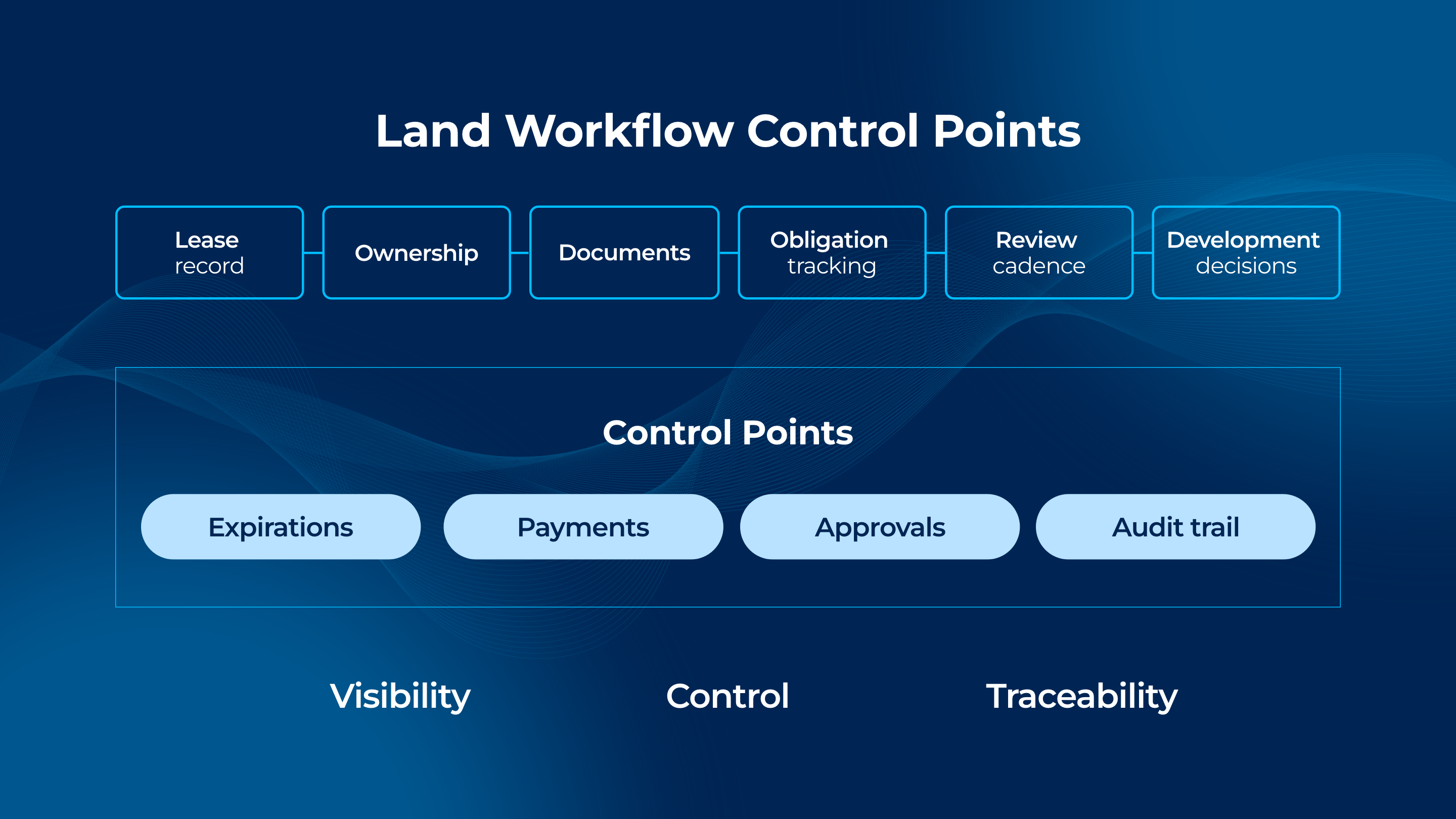
A dependable land workflow is built on a single source of truth for agreements, ownership, and obligations. This includes:
- Centralized lease and document records
- Clear status tracking for agreements
- Visibility into upcoming obligations and risks
- Shared access across land, operations, and finance
When systems support this structure, land data becomes usable across the organization. Development teams can evaluate lease positions before committing to activity. Finance teams can align payments with obligations. Decisions move faster because the underlying data is accessible and consistent.
Scalable Process State
As land portfolios grow, manual tracking becomes less reliable. A scalable process maintains consistency regardless of volume by standardizing how agreements are recorded, reviewed, and acted upon.
In this state, obligation tracking is part of a defined cadence rather than an exception-driven activity. Cross-functional teams access the same information without relying on informal communication. This improves traceability and supports repeatable workflows across assets.
All About Timing
Land and lease management is an operational discipline that directly affects asset control and development timing. Centralized records, early visibility into obligations, and structured review processes allow teams to act with confidence.
When land data is organized and accessible, the business reduces risk, improves coordination across teams, and maintains control over its acreage position.
Frequently Asked Questions About Land and Lease Management
What is lease management in oil and gas?
Lease management involves tracking and acting on the rights, obligations, and documents tied to mineral leases and surface agreements. It includes monitoring expirations, payments, and operational commitments that affect development activity.
Why is obligation tracking important for energy companies?
Obligation tracking ensures the business meets deadlines tied to agreements. Missing these deadlines can lead to lost acreage, financial penalties, or contractual exposure. Structured tracking reduces these risks.
What is the difference between land administration and land management?
Land administration focuses on record-keeping, document management, and data maintenance. Land management includes broader responsibilities such as acquisition strategy, obligation oversight, and coordination with development planning.
Learn more about Upstream On Demand Land.
 Previous Page