 5 min read
Plenty of good plans fall apart in upstream operations, and it has nothing to do with how well they were made. Something shifts in the field, and by the time word gets back to the right people, the cost is already baked in.
A vessel misses its sailing window. Materials arrive late. Rental equipment sits idle. The planning worked fine. The problem is what happens when execution drifts and nobody sees it in time.
That's the planning-to-execution gap. It's been one of the most persistent sources of avoidable cost in upstream oil and gas. But it doesn't have to stay that way.
Why the Gap Exists
Most energy organizations run planning, production, and accounting on systems that are good at what they were built for. The problem is none of them were built to show a shared, real-time picture of how logistics, materials, personnel, and transportation fit together when things are actually moving.
So when something changes, teams fall back on emails, spreadsheets, and phone calls. By the time a readiness risk surfaces, the cheap fix is usually already gone.
The result is a pattern most operators know well. Missed sailings. Late materials. Premium freight. Rental leakage. Each one looks like a one-off execution problem. Together, they point to something structural, a gap between where plans are made and where work actually gets done.
Connecting Planning Data Is Only Part of the Answer
Connecting planning, production, and accounting data helps organizations make better-informed operational decisions. But it does not, on its own, close the execution gap.
What organizations also need is a governed way to manage execution as conditions change, and live visibility into how changes across logistics, materials, personnel, and transportation affect work readiness across the supply chain.
With the acquisition of Streamba, Quorum extends its connected operations strategy into live logistics and supply chain execution. Streamba's Visibility, Orchestration and Response platform, VOR, provides a governed execution layer that connects existing enterprise systems into a shared operational picture and helps teams act before exceptions become costs.
How VOR Works
VOR does not replace planning systems or existing enterprise tools. Planning applications continue to define priorities and scenarios. ERP, EAM, procurement, and personnel systems remain the systems of record for their respective data. Freight, marine, aviation, and road transport systems continue to drive domain execution.
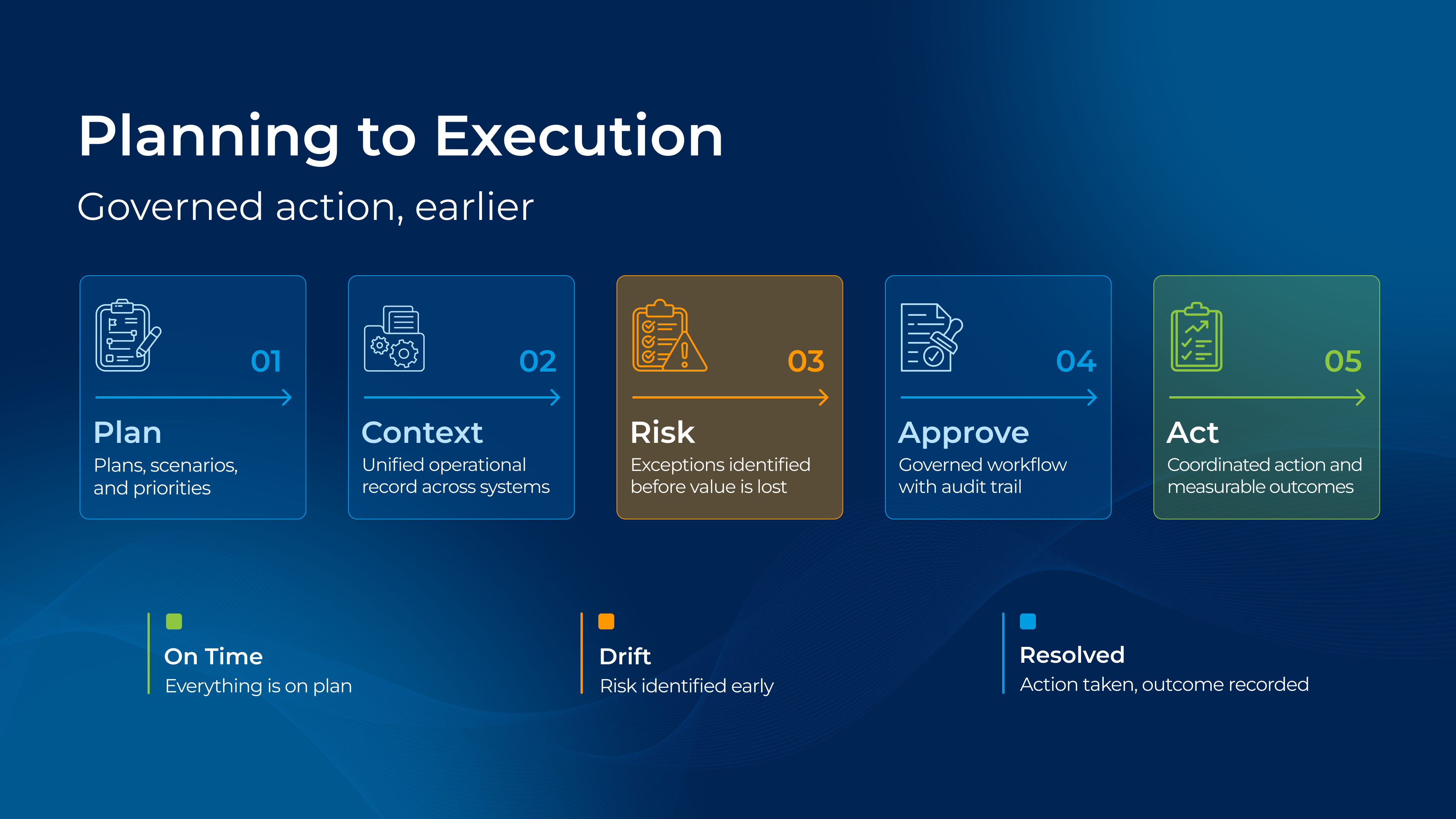
VOR connects those systems into a single operational context. Instead of monitoring individual activities in isolation, operations teams gain visibility into how changes across logistics, personnel, materials, and transportation affect work readiness and execution.
As operational events unfold, VOR helps teams identify execution risks before they affect schedules or budgets, recommend the next operational action, route decisions through governed approval workflows, and maintain a complete audit trail of actions and outcomes.
Visibility alone does not resolve operational issues. VOR applies governed AI to surface exceptions early and reduce the administrative effort of coordinating a response, while keeping accountability intact. Every recommendation is linked to its source data. Operational changes require explicit approval. Decisions are fully auditable.
What This Means for Quorum Customers
For organizations already using Quorum's planning, production, and accounting solutions, VOR closes a longstanding gap between planning decisions and field execution.
Risks related to shipments, approvals, personnel readiness, and logistics become visible early enough for teams to intervene before costs escalate. Earlier visibility also helps reduce reactive decisions that lead to premium freight, emergency transportation, duplicate movements, or unnecessary rental expenses.
As part of Quorum's expanding logistics portfolio, VOR will work alongside DaWinci to connect logistics planning, execution, and operational intelligence across both personnel and cargo movements.
The Governed Execution Foundation
Quorum has described the acquisition of Streamba as an extension of its connected operations strategy, from planning into execution.
VOR delivers the governed execution foundation by detecting operational drift, recommending next steps, routing decisions through controlled approval workflows, and maintaining a complete audit trail. Every change requires explicit approval. Every recommendation is logged to its source context. Every action is auditable.
This is not a replacement for the systems energy operators already rely on. It is a layer that connects them, surfaces what matters, and helps teams act with confidence when conditions change.
The Bottom Line
Most operators eventually recognize when execution has gone off track. The greater opportunity is identifying execution risk early enough to change the outcome.
By connecting operational context across enterprise systems, surfacing exceptions before they escalate, and guiding teams through governed, auditable workflows, VOR helps organizations move from observing operational issues to resolving them before the cost is incurred.
As Quorum continues to connect planning, production, logistics, and execution, customers gain more than greater visibility. They gain the operational confidence to make faster, better-informed decisions before execution risk becomes operational cost.
Read a press release about VOR at Quorum Software.
 Previous Page