 5 min read
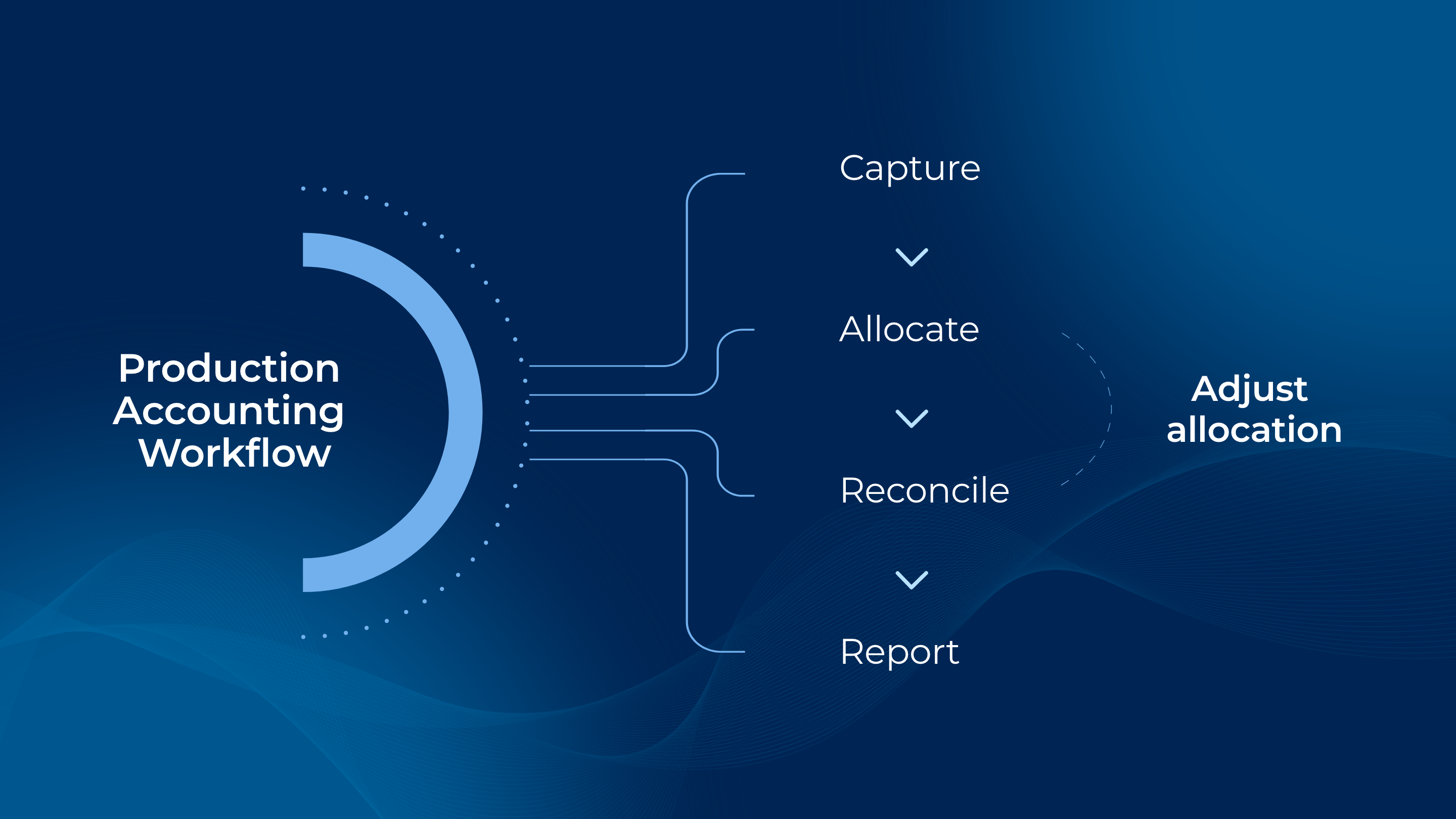
Production accounting is the process of turning field production data into a structured operational record used to track, manage, and report production activity. For field and operations teams, solutions like Upstream On Demand Production (ODP) support how volumes are captured, allocated, and reported across assets, providing a consistent view of production for internal and regulatory use. The workflow determines whether the business operates from a reliable and explainable production record.
Key Takeaway
Production accounting establishes a consistent record of field volumes through allocation and reconciliation. The workflow depends on accurate data capture, defined allocation logic, and disciplined review. When these elements hold together, teams maintain reliable production reporting and produce stable allocated volumes used by downstream processes such as revenue and cost allocation.
How Production Accounting Works
Where Process Variability Enters
Production accounting workflows vary based on asset complexity, ownership structures, and facility design. Shared facilities, commingled streams, and changing operating conditions all affect how volumes are assigned.
Allocation is the most sensitive point in the workflow. Changes in facility operations, new wells, or ownership adjustments require updates to allocation rules. Allocation processes that operate in real time allow teams to see updated results within minutes as data changes, rather than waiting for scheduled runs. If those updates are not maintained, the process continues using outdated assumptions. Automated allocation configuration helps keep rules aligned with current operations by reducing manual updates and maintaining consistency as conditions change.
Variability also appears in how teams manage timing differences, missing data, and late adjustments. These differences carry forward into reconciliation and reporting, increasing the effort required to maintain a consistent production record.
Impact on Operational Outcomes
Production accounting directly influences internal production reporting, operational visibility, and regulatory reporting. A consistent workflow produces results that can be explained and validated without rework.
When allocation logic or reconciliation practices are inconsistent, issues appear in day-to-day operations:
- Conflicting internal production reports
- Rework to validate or explain volumes
- Reduced confidence in reported production data
- Repeated adjustments across reporting cycles
A stable process reduces these issues and allows teams to focus on analysis instead of validation. Consistency from allocation through reporting ensures that production data remains usable across operational workflows.
Where Issues Typically Occur
Issues typically emerge where data changes form or ownership. These points introduce risk if controls are not clearly defined.
| Control Area | What It Influences | Risk if Weak |
| Volume capture | Completeness and accuracy of source data | Missing or incorrect production inputs |
| Allocation method | Distribution of shared volumes | Inconsistent volume distribution across assets |
| Allocation maintenance | Alignment with current operations | Outdated assumptions driving incorrect results |
| Transparency | Understanding of how results are derived | Reduced trust and delayed internal validation |
| Reconciliation | Validation across systems and periods | Unresolved imbalances and repeated adjustments |
The Role of Volume Reconciliation
Reconciliation confirms that production results are complete, consistent, and explainable across systems and reporting periods. It is most effective when performed as part of the workflow rather than at the end.
A structured reconciliation process typically includes:
- Confirming expected volume data is present and aligned in timing
- Reviewing allocation logic and recent changes
- Resolving material differences while operational context is still available
Over time, teams improve efficiency by documenting recurring issues and standardizing review steps. Known timing differences and data gaps can then be addressed earlier in the cycle, reducing repeated adjustments later.
What Effective Production Reporting Looks Like
Production reporting is effective when it reflects both results and the logic behind those results. Reports show what was produced, how volumes were allocated, and where exceptions remain.
Clarity depends on defined ownership across teams. Operations provide context for physical movement, measurement teams validate inputs, and production accounting produces the structured output used for internal and regulatory reporting. Downstream accounting teams then use allocated volumes as inputs into revenue and cost processes.
Reports that lack transparency create additional effort. Users request revalidation, question assumptions, and delay decisions until results are confirmed.
The Role of Systems and Data Flow
The effectiveness of production accounting depends on how data moves between systems. Manual data handling introduces delays and increases the risk of errors, especially when volumes pass through multiple steps before reporting. Field-based mobile applications reduce this risk by using OCR to automatically capture oil ticket data, allowing users to view allocated results and continue working even in offline environments.
Integrated systems connect:
- SCADA, measurement, and field data capture
- Production allocation processing
- Accounting and revenue systems
- Reserves and planning systems
When these workflows remain connected, production data moves consistently from field capture through reporting. This improves traceability from source volumes to allocated results and supports consistent downstream use. Modern SaaS-based architectures further strengthen this flow by enabling continuous updates, real-time processing, and system-wide accessibility without added operational overhead.
What a Scalable Production Accounting Process Looks Like
A scalable process maintains consistency as asset complexity and reporting demands increase. Cloud-native SaaS platforms support this scalability by eliminating the infrastructure overhead and upgrade cycles associated with traditional on-premise or hybrid environments. It relies on defined allocation methods, repeatable reconciliation routines, and clear ownership across teams.
In a stable state, the workflow produces:
- Consistent allocation outcomes across periods
- Fewer reconciliation exceptions
- Reporting that can be explained without rework
- A stable production record for downstream use
This consistency allows production accounting to support downstream revenue and cost allocation processes without introducing variability.
On the Record
Production accounting establishes the operational record of field activity. The workflow depends on accurate volume capture, consistent allocation logic, and disciplined reconciliation.
When these elements are maintained, production data remains consistent, explainable, and usable across operational reporting and downstream processes. When they are not, issues carry forward as rework, uncertainty, and inconsistent reporting.
Learn more about how Upstream On Demand Production (ODP) supports production management and reporting workflows.
Frequently Asked Questions About Production Accounting
What is production accounting in oil and gas?
Production accounting is the process of collecting production volumes, applying allocation methods, reconciling results, and producing reports used for internal operations, regulatory reporting, and downstream accounting inputs.
What is production revenue accounting?
Production revenue accounting applies pricing and contract terms to allocated volumes. It produces revenue entries based on production data and depends on accurate allocation outputs.
What is the difference between production accounting and financial accounting?
Production accounting focuses on volumes, allocation, and the operational record. Financial accounting includes revenue, costs, and external reporting, using production outputs as inputs into those processes.
 Previous Page