 5 min read
Pipeline Nomination: Scheduling, Confirmations, and Failure Points
Platforms like My Quorum Pipeline support nomination, scheduling, and invoicing across pipeline operations. The process itself depends on coordination across shippers, counterparties, and operators within fixed cycle windows.
Pipeline nomination turns volume intent into scheduled flow. Each step—submission, confirmation, scheduling—determines whether that intent holds.
How the Nomination Workflow Operates
A nomination defines volume, receipt and delivery points, contract reference, and flow period. The pipeline evaluates each request against system capacity and competing nominations, then issues a scheduled quantity.
The workflow runs on structured cycles. Timely sets the base position. Evening allows adjustment before flow. Intraday cycles handle changes during the gas day. Each window closes on a fixed deadline. Submissions outside that window do not advance.
NAESB standards define how these cycles operate. Timing, format, and communication stay consistent across pipelines.
Scheduling and Confirmations
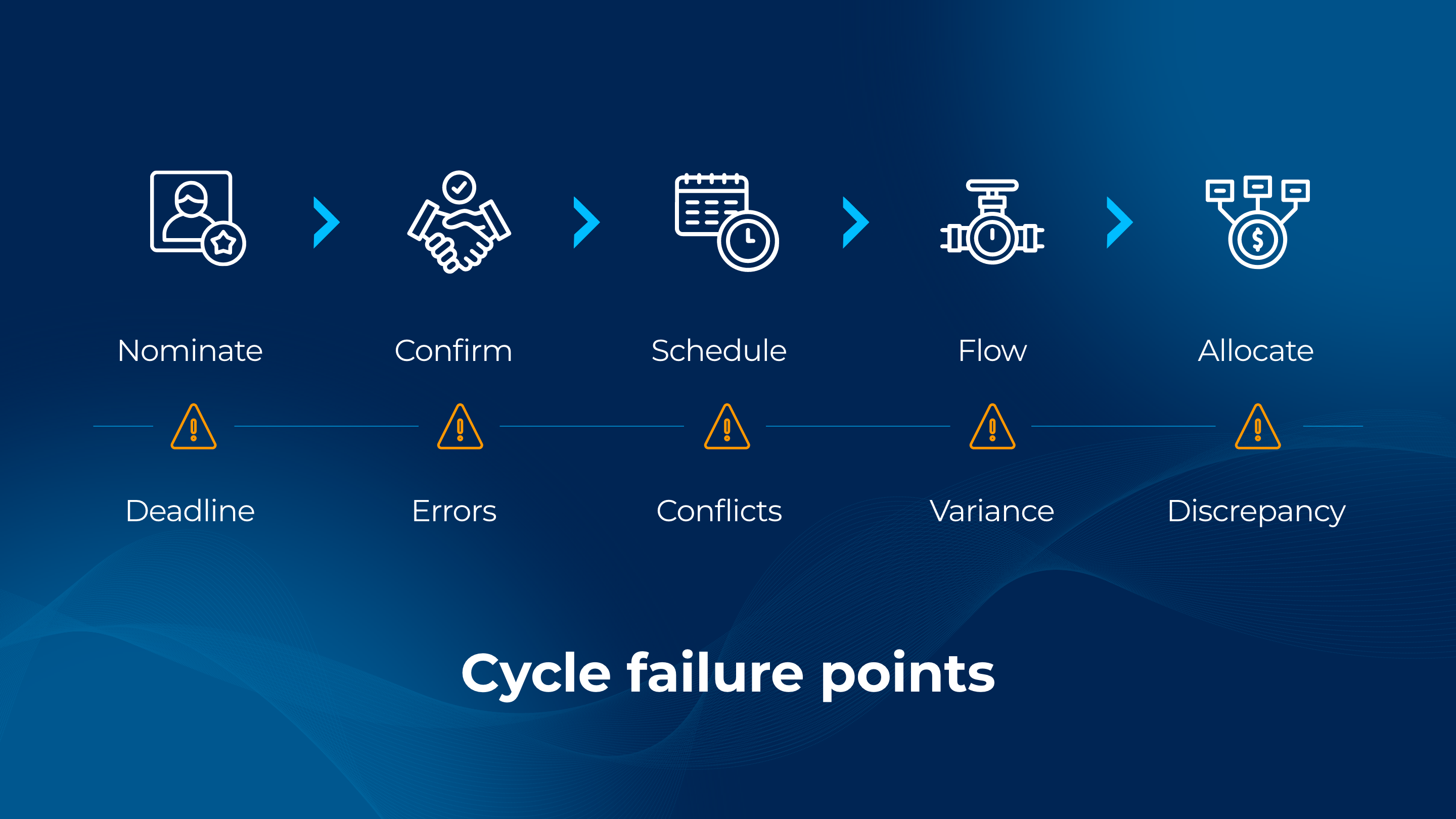
The workflow moves through nomination, confirmation, scheduling, and allocation. Each step builds on the last. Confirmations determine whether a nomination can move forward as submitted. Upstream and downstream parties must align on volume. When they do not, the scheduled quantity follows the lower value. Capacity does not override that outcome.
Timing drives the same result. Missed confirmations reduce or remove scheduled volumes based on tariff rules. The process depends on alignment within the cycle, not after it.
Where the Process Breaks Down
Most failures originate in execution. Deadlines pass before submissions are complete. Counterparties confirm different volumes. Data fails validation due to incorrect points or outdated contracts. Competing nominations reduce available capacity.
These issues repeat across cycles. Each one is small. The impact accumulates.
Process Discipline and Outcome Impact
Nomination quality shows up in the gap between intent and result. Clean inputs and aligned confirmations keep scheduled volumes stable. Breakdowns create divergence between nominated, scheduled, and actual flow. That divergence drives rework, exposure, and operational adjustment.
As pipeline nomination workflows mature, maintaining consistency across submission, confirmation, and scheduling becomes critical to reducing operational variability. In practice, organizations that modernized pipeline workflows—such as in Utility: Pipeline Workflow Modernization—were able to improve visibility across nomination cycles and reduce errors tied to timing, data entry, and counterparty alignment. By standardizing how nominations were submitted and tracked, teams minimized missed deadlines and reduced discrepancies between nominated and scheduled volumes. This improved coordination across counterparties and allowed issues to be addressed within the active cycle rather than after the fact. The result is a more predictable nomination process where scheduling outcomes more closely reflect operational intent and imbalance exposure is reduced.
Imbalance Starts at Nomination
Imbalance reflects the difference between scheduled and actual volumes while the nomination process sets that baseline. When inputs are consistent and confirmations align, imbalances stay controlled. When they do not, the gap widens and becomes harder to manage. Daily visibility, intraday adjustment, and consistent counterparty alignment keep the gap contained.
System Support and Workflow control
Nomination workflows span contracts, counterparties, cycle deadlines, and multiple systems. Control depends on visibility across the full cycle. Submission status, confirmation alignment, and approaching deadlines must be clear before the window closes. For reconciliation after flow, measurement data must align with scheduled volumes. FLOWCAL supports that step by providing validated measurement data for downstream comparison.
What Scalable Nomination Workflows Look Like
Strong nomination workflows are consistent. Inputs are validated before submission. Counterparties stay aligned within the cycle. Status is visible without manual consolidation. Adjustments happen within the same workflow, not outside it.
This reduces variability and stabilizes scheduling outcomes.
The Process
Pipeline nomination is a time-bound coordination process. Outcomes depend on accuracy, timing, and alignment across every step. Controlled workflows reduce imbalance exposure and keep scheduling predictable across pipeline operations.
Visit My Quorum Pipeline to find out what predictability could look like at your organization.
 Previous Page