 6 min read
Large upstream operators are being asked to maintain planning rigor with fewer people and more consolidated roles. For one global supermajor managing complex assets across its portfolio, that pressure was most visible during annual business planning. Coordination of engineering, scheduling, economics, and data management was often falling on the shoulders of a team of planners, economists, while pulling on the asset staff delivering the business—stretching timelines and increasing rework.
By standardizing workflows with Planning Space, the organization reduced planning effort by approximately 60% per business unit and shortened planning re-cycles from weeks to hours, enabling faster, more confident decision-making at scale while improving the businesses' ability to respond to questions and provide insights confidently with minimized distraction.
The Challenge: Business Planning Strain at Scale
For this organization at the enterprise-level scale, upstream business planning became a coordination challenge as much as an analytical one. Each asset plan depended on inputs from multiple contributors and must align with shared portfolio-level assumptions. Timelines were crunched—the work had to be down as soon as capital steer became available from the group with 100% accuracy and signoff.
During plan season, three to four full-time equivalents per business unit were routinely consumed by:
- Managing spreadsheet updates
- Validating assumptions across tools
- Coordinating reviews and approvals
Each revision triggered new rounds of schedule updates, forecast changes, and economic recalculations. In one planning cycle, a request to make a scenario for adjusted capital resulted in a revised rig schedule, re-requesting capital inputs, and updating economics. This took two weeks to translate into updated economics, extending re-cycles for weeks and pulling asset teams away from operational priorities.
Fewer Roles, Broader Responsibility
Another aspect of the challenge at this company included how as teams became leaner, individual planners took on broader responsibility. A single role often owned engineering inputs, model logic, data management, and economic outcomes for an entire asset as top-down cost pressures realized what was necessary to be competitive.
Under this model, productivity depended on continuity. Each handoff introduced delay. Each disconnected tool increased the effort required to validate results. Planning effectiveness became directly tied to how seamlessly work could move from operational inputs to financial outcomes.
Workflow design and standardization were critical levers for sustaining performance with fewer people.
The Decision: Standardizing the Most Painful Process / Standardized Planning With Planning Space
To address these challenges, the company implemented Planning Space as a standardized foundation for upstream business planning across assets.
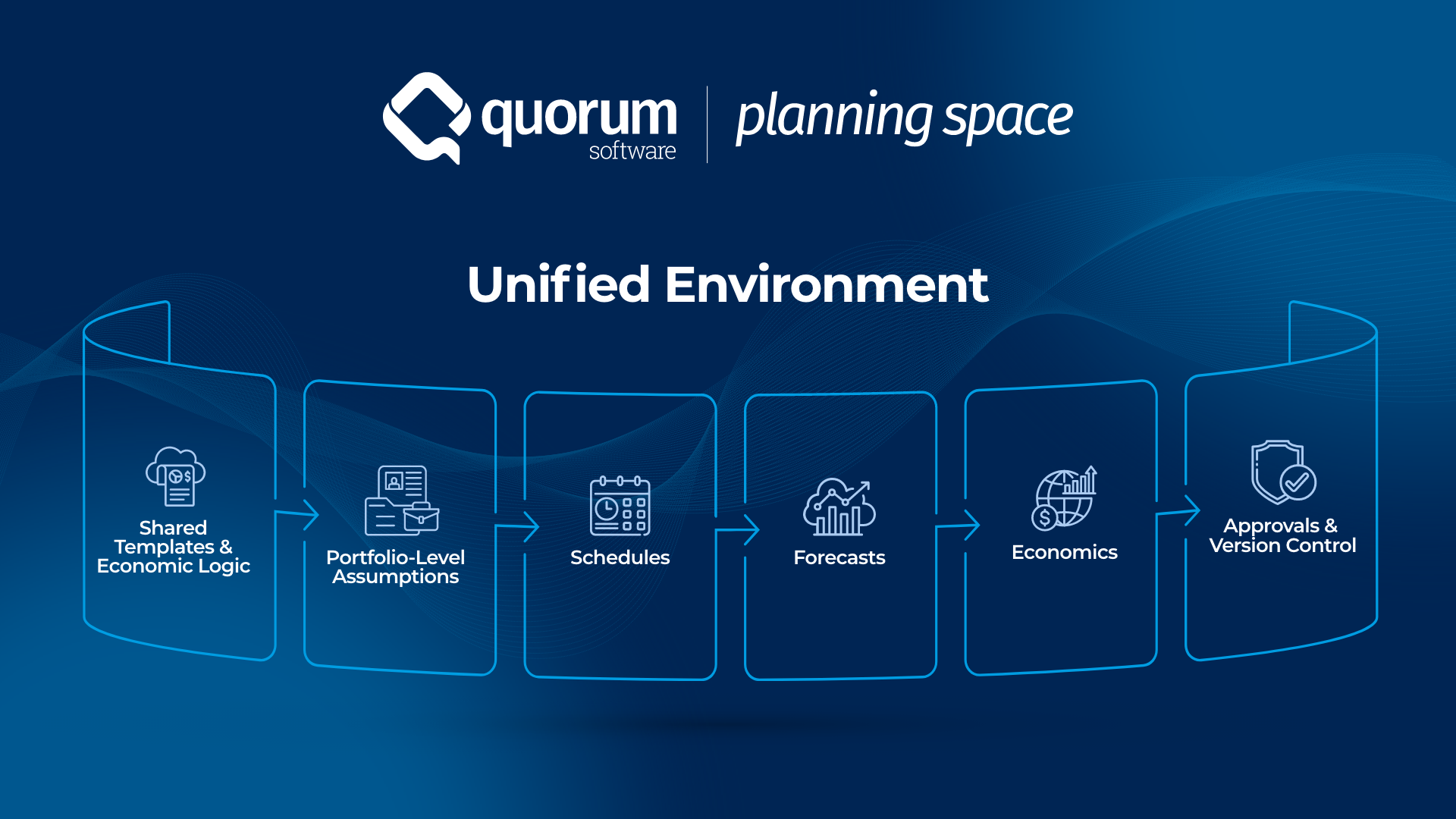
Planning Space provided a unified environment where:
- Shared templates and approved economic logic governed plan structure
- Portfolio-level assumptions were applied consistently
- Schedules, forecasts, and economics were connected within a single workflow
Updates propagated automatically through the plan, eliminating manual reconciliation. Version control, data quality checks, and approvals were governed within the system, creating a clear audit trail for every revision.
With this structure in place, one planner could manage an asset plan from input collection, economics, and business intelligence/communication, significantly reducing coordination overhead and enabling faster turnaround by not requiring multiple handoffs to update a scenario.
The Results: Faster Re-Cycles and Lower Planning Effort
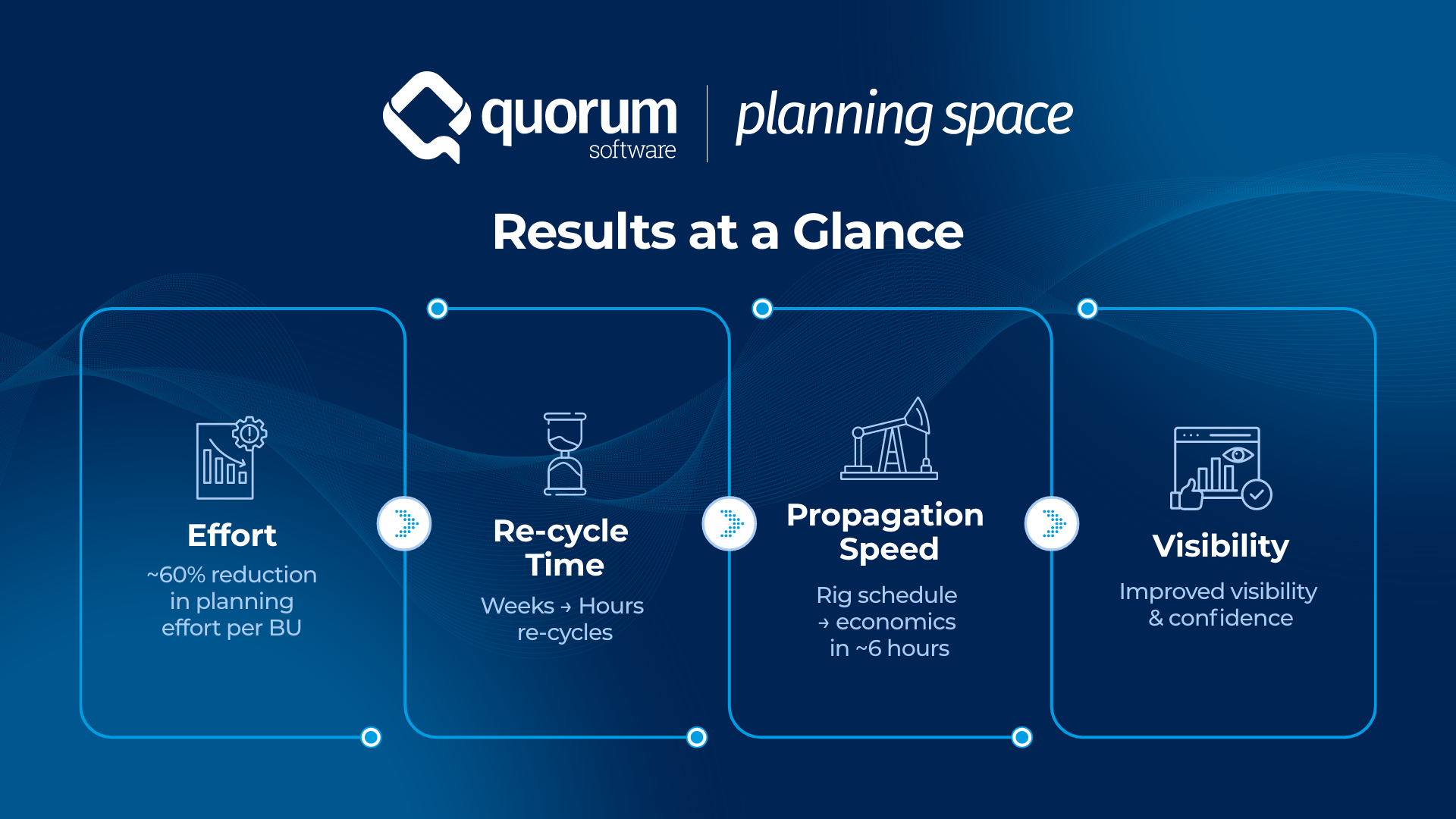
Standardizing planning workflows delivered measurable improvements during plan season and beyond:
- ~60% reduction in planning effort per business unit
- Re-cycle turn times reduced from weeks to hours
- Rig schedule changes reflected in economics within ~6 hours
- Improved visibility and confidence for central planning teams
Planning shifted from an annual disruption to an ongoing process. Asset teams aligned planning work more closely with day-to-day activities, while central teams gained faster cross-asset insight without restarting the process for each update.
From Time Savings to Better Decisions
The most important outcome of faster planning cycles was not just efficiency—it was what teams could do with the time they regained.
With Planning Space eliminating manual reconciliation and handoffs, planners were no longer consumed by rebuilding schedules and re-running economics for every change. Instead, they used that time to run more scenarios, explore sensitivities, and stress-test assumptions before decisions were finalized.
Planners could quickly evaluate how changes in capital, activity levels, or timing impacted production, cash flow, and portfolio alignment. Assets gained a clearer view of their risks, opportunities, and available levers—before leadership discussions, not after.
This shift also changed the quality of conversations across the organization. Asset leadership and portfolio teams moved away from debating data validity and toward discussing tradeoffs and outcomes. Because scenarios were generated quickly and consistently, teams could focus on what actions to take rather than how long it would take to get answers.
By turning time savings into analytical depth, Planning Space helped elevate planning from a coordination exercise into a decision-support capability—strengthening alignment between planners, asset teams, and portfolio leadership.
Customer Perspective
“By standardizing planning workflows and reducing handoffs, teams were able to respond faster without sacrificing rigor—turning planning from an annual disruption into an ongoing capability.”
— Planning Lead, Global Oil & Gas Operator
(Anonymized customer)
Planning Built for Enterprise-Scale Upstream Operations
Large upstream operators need planning systems that reflect asset complexity, organizational structure, and leaner operating models. By standardizing workflows and governance in Planning Space, this global supermajor accelerated planning execution while reducing the effort required to deliver results.
The result was clearer alignment between asset teams and central planning, faster response to change, and sustained planning rigor at enterprise scale.
 Previous Page