 7 min read
Across North America's energy industry, operators have spent the last two decades digitizing or modernizing the business, and the results show. But that progress has also introduced a new challenge: operational friction created by the growing number of systems, workflows, and data environments required to run the business. Today's operators are not struggling because they lack information. They are struggling because of what happens between systems.
That tension, more data and less alignment, runs across upstream production, gathering, transportation, midstream operations, and back-office functions. The next phase is no longer about adding more technology. It is about building operational environments that are integrated, context-aware, and capable of adapting in real time.
Connected Is Not the Same as Aligned
The first wave delivered real progress. Measurement platforms, scheduling tools, allocation engines, and invoicing workflows replaced manual processes and brought structure to individual functions across the value chain.
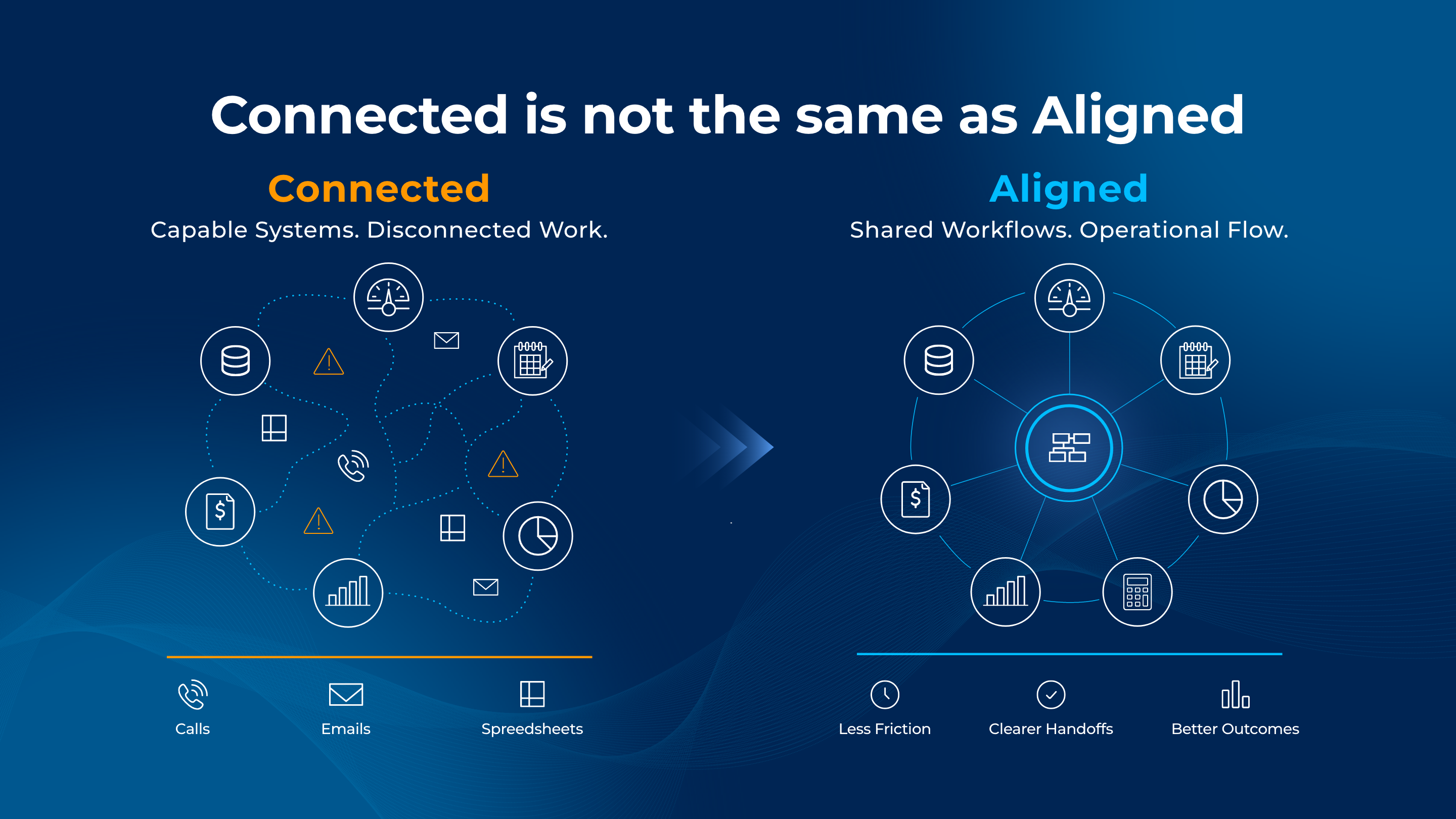
But that progress created a new problem: capable systems that do not naturally work together. Today the challenge is not any single application. It is the gaps between them — the handoffs, manual reconciliations, and coordination that still move through calls, emails, and spreadsheets instead of shared workflows.
Operational friction is no longer created by a lack of systems. It is created by a lack of alignment between them.
The Cost of Data You Can't Trust
Operational speed only creates value when teams can trust the information behind it.
Data exists across most energy operations in abundance. The problem is what it is missing: validation, context, and traceability. A measurement read with no source link. An allocation figure with no audit trail. A settlement dispute that takes weeks to resolve because no one can reconstruct how the number was produced.
Energy operations are just like math teachers asking to show the work: the right answer doesn’t matter if you can’t trace it back.
What operators need is a trusted operational foundation. Shared context. Validation embedded earlier in workflows. Records that operations, commercial, compliance, and finance teams can all access and trust. When that foundation is in place, decisions move faster and the answers that matter most become easier to give. Modernization fails when information moves slower than operations.
Intelligent Automation Should Support Operational Expertise
The goal is not replacing operational expertise. The goal is enabling it to scale more effectively.
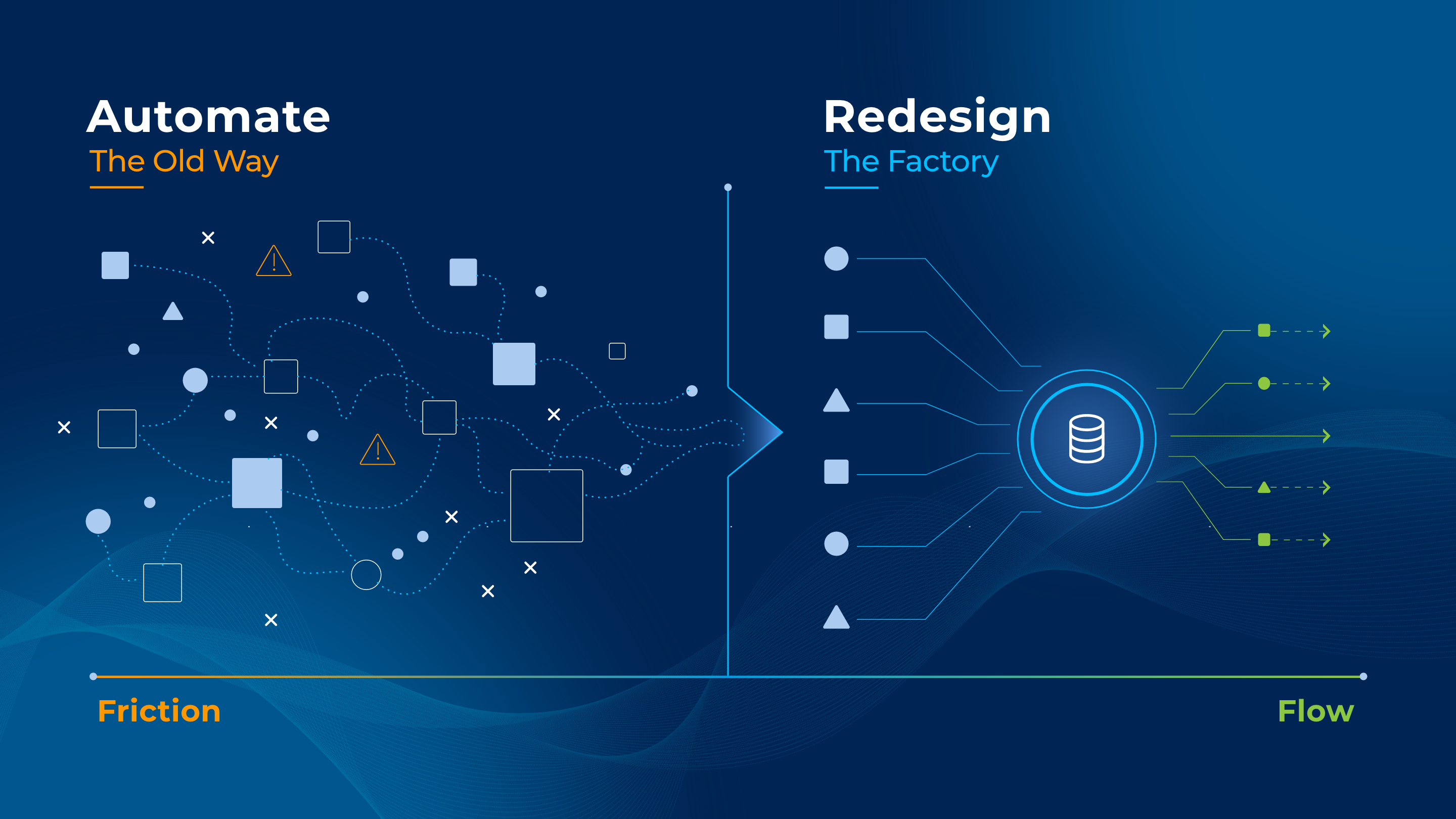
Henry Ford once said that if he had asked people what they wanted, they would have said faster horses. When factories first adopted electrical motors to replace steam engines, productivity barely moved. It wasn’t until engineers stopped recreating the old layout and redesigned the factory around the new capability that output exploded.
The same choice exists in energy operations today.
Energy operations depend on experienced people. People like engineers who understand how production, gathering, and transportation systems behave, measurement specialists who recognize what an anomalous read means in context, and schedulers and commercial analysts who can anticipate downstream impacts before they happen. Automating their manual tasks is the faster horse. Restructuring how operational data moves across teams, surfaces exceptions, and supports decisions is redesigning the factory.
What organizations can reduce is the overhead surrounding that expertise:
- Manual data entry that consumes operational time without improving decision quality
- Cross-system searches for information that should already be surfaced in context
- Reconciliation work created by fragmented workflows and inconsistent operational records
- Coordination tasks that rely on calls, emails, and spreadsheet comparisons to move information between teams
Intelligent automation changes where effort is spent. It surfaces anomalies faster, reduces manual coordination, and shortens the distance between identifying an issue and acting on it.
Organizations that lead are not the ones automating the most. They just automate the right things, freeing their teams to focus on the operational expertise that creates business value.
Open Operational Ecosystems Are Becoming Essential
North American energy operators do not operate within a single technology environment, and they never will. Operational workflows span systems built at different times, for different functions, and often by different vendors.
Operational flexibility depends on how effectively those environments can exchange and align information. Systems that operate in isolation create friction at every boundary.
An open, interoperable operational architecture allows organizations to unify workflows without rebuilding operations from the ground up. It enables operational data to move consistently across systems, supports integration with new data sources, and creates the flexibility needed as business requirements evolve.
As operations scale, disconnected environments become harder to manage. More assets, more commercial complexity, and more operational data all place additional pressure on fragmented workflows.
For operations and technology leaders across the energy value chain, interoperability is no longer a technical preference. It is becoming a core operational capability.
The Future of Energy Operations Will Be More Adaptive
The technology landscape supporting operational transformation is evolving rapidly. Capabilities that were difficult or impractical to implement only a few years ago are becoming far more accessible. At the same time, the gap between organizations modernizing operational workflows and those maintaining fragmented environments is beginning to widen.
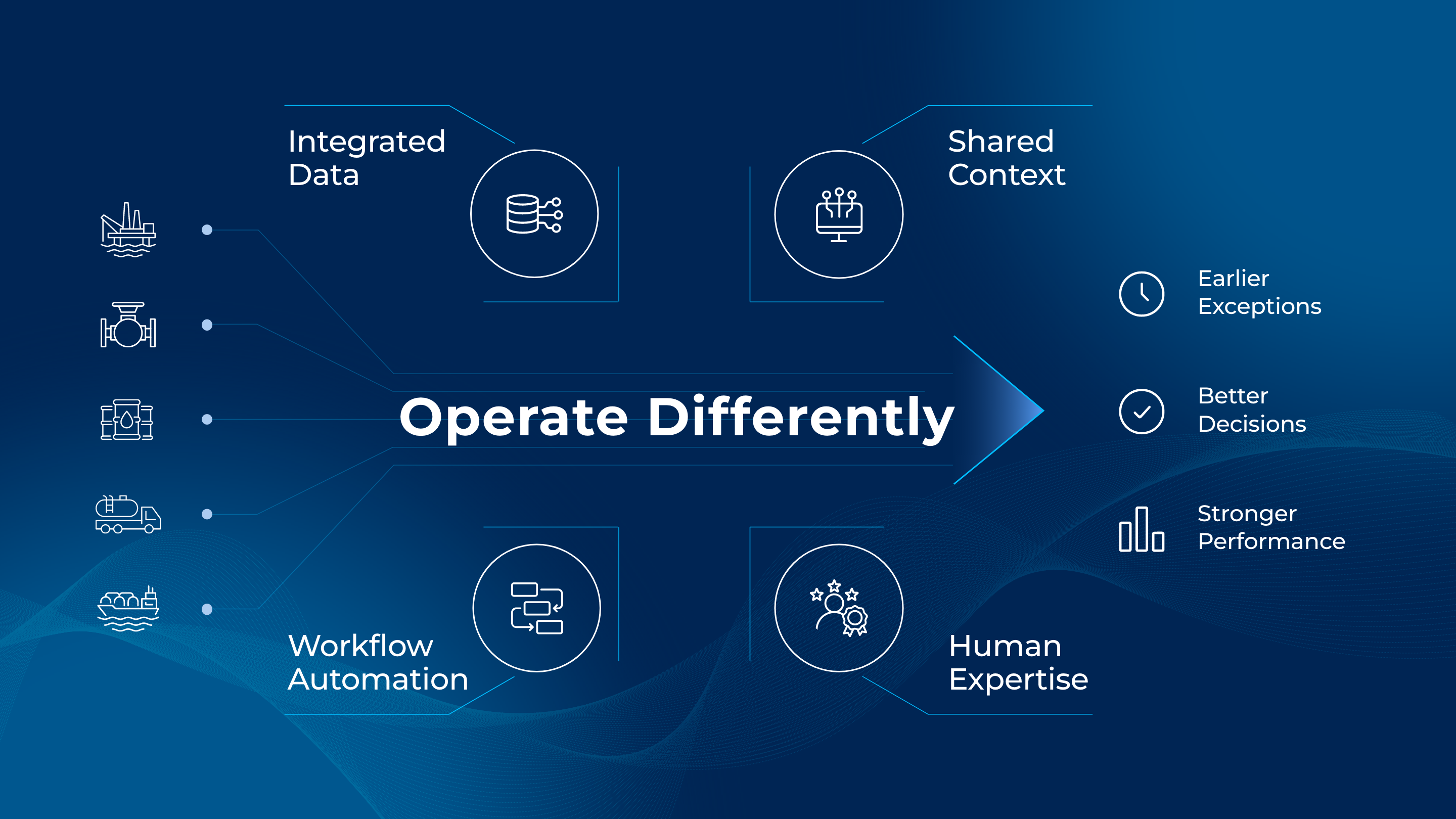
The next generation of energy operations will not simply perform existing workflows faster. They will operate differently, with environments that are context-aware, exceptions that surface earlier, and decisions supported by operational intelligence that draws from the full operational picture.
That future depends on four capabilities working together:
- Integrated operational data across the value chain
- Shared operational context that makes that data meaningful
- Workflow automation that reduces friction and overhead
- Human expertise applied where it creates the most value
The organizations making the strongest progress are improving operational alignment incrementally streamlining workflows, strengthening data quality, and reducing manual coordination where it creates the most friction.
The goal is no longer adding more technology. It is about building operations that can respond with greater clarity, confidence, and speed.
The Moment to Rethink
For operations and technology leaders across North America’s energy industry, the question is no longer whether modernization matters. Market volatility, workforce pressures, regulatory expectations, and operational demands have already answered that.
The more important question is whether current investment efforts are reducing operational friction or simply adding new layers to it.
The organizations that will lead are not necessarily the ones adopting the most technology first. They are the ones rethinking how information moves through their business and building operational environments where trusted data, intelligent automation, and human expertise work together as a coordinated system.
Competitive advantage in the next phase of energy operations will come from how effectively organizations align data, workflows, and expertise into a single operational environment from the wellhead to the back office.
Explore Quorum’s perspective on integrated energy operations and what modernization looks like in practice.
 Previous Page